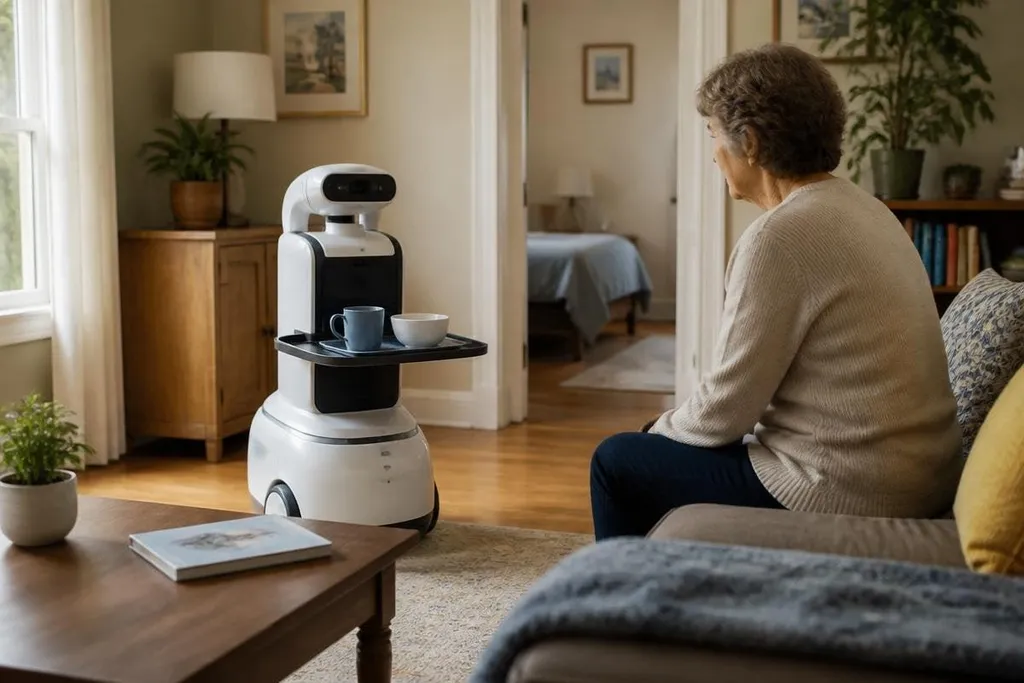
A caregiving robot may remind someone to take medicine, carry a meal, or call for help after a fall. The harder task is fitting those actions into a home where rooms, people, and daily needs change without warning.
- Useful care starts with reminders, lifting help, and a clear call for assistance.
- Safe movement needs cameras, force sensors, and a way to stop at once.
- Human staff will still handle decisions that need judgment and trust.
The first jobs will be narrow
Care robots will have a better chance with repeatable tasks. A robot can bring an object from a known place, carry a tray across a clear room, or give a spoken reminder at a set time.
Those jobs matter because they can reduce routine trips for a family carer or care worker. They also give the robot a clear task, a known start point, and a simple way to check whether the task finished.
Care work includes less predictable moments. Someone may drop a cup, move a chair, refuse a meal, or ask a question the system can't answer. Handling one task well may still leave the robot needing a person close by when the situation changes.
Safe movement matters more than a human shape
A home robot needs cameras or other sensors to find walls, furniture, people, and pets. Force sensors can help it detect contact, but sensing contact after a bump isn't the same as avoiding the bump.
The robot also needs a physical stop button that a person can reach, a low-speed mode near people, and a clear warning when it can't complete a task. These details matter more than a face on a screen or a voice that sounds warm.
Lifting creates another limit. A robot that carries a light meal has a different job from one that helps someone stand.
The second task places force on a person's body, so the robot needs careful control, a stable base, and a plan for loss of balance.
Homes create the hard cases
Hospitals and care homes can control more of their layout. Private homes cannot. Rugs, narrow doorways, steps, low tables, and charging locations will vary from one address to the next.
That means a care robot may need a setup visit before daily use. A technician could map the rooms, set safe routes, check the stop controls, and show the household what the robot can and cannot do.
Privacy will shape the design too. Cameras and microphones can collect sensitive details about a person's health and habits. A useful system should explain what it records, where the data goes, and how a person can turn collection off.
Privacy claims need evidence beside the robot’s care task. Robot24.com's robotics coverage can tie that task and its limits to a named machine before the next section asks where human judgment still belongs.
The human role will remain clear
A care robot should pass information to a person when a task fails or a person's condition changes. That could mean a message to a family member, a call to a care team, or an alert at the robot's control panel.
The alert must include useful detail. “Help needed” leaves the person guessing. “The robot reached the bedroom door, found it closed, and stopped” gives them a place, a reason, and a next action.
I’d be cautious about any care robot sold as a replacement for human contact. A machine can carry objects and issue reminders; it can't take responsibility for a care decision or build trust with a frightened person.
A practical check before a care pilot
Before a care provider or family starts a trial, check these points:
- Name the task: Write down the exact job, its start point, and what counts as success.
- Set the stop rule: Decide when the robot must stop and who receives the alert.
- Check the room: Measure door widths, floor changes, steps, and the charging area.
- Test the handoff: Confirm that a person can take over without searching through several screens.
- Review the data: Ask what the robot records, how long it keeps the data, and who can see it.
- Plan failure: Keep a human method for meals, reminders, and emergency calls when the robot is offline.
The next useful proof will come from long care trials in ordinary homes, where the robot must handle clutter, missed tasks, privacy questions, and real handoffs.
Until those trials show safe performance over time, caregiving robots belong beside human care, not in its place.